
Verify insurance, inductions and the right to enter
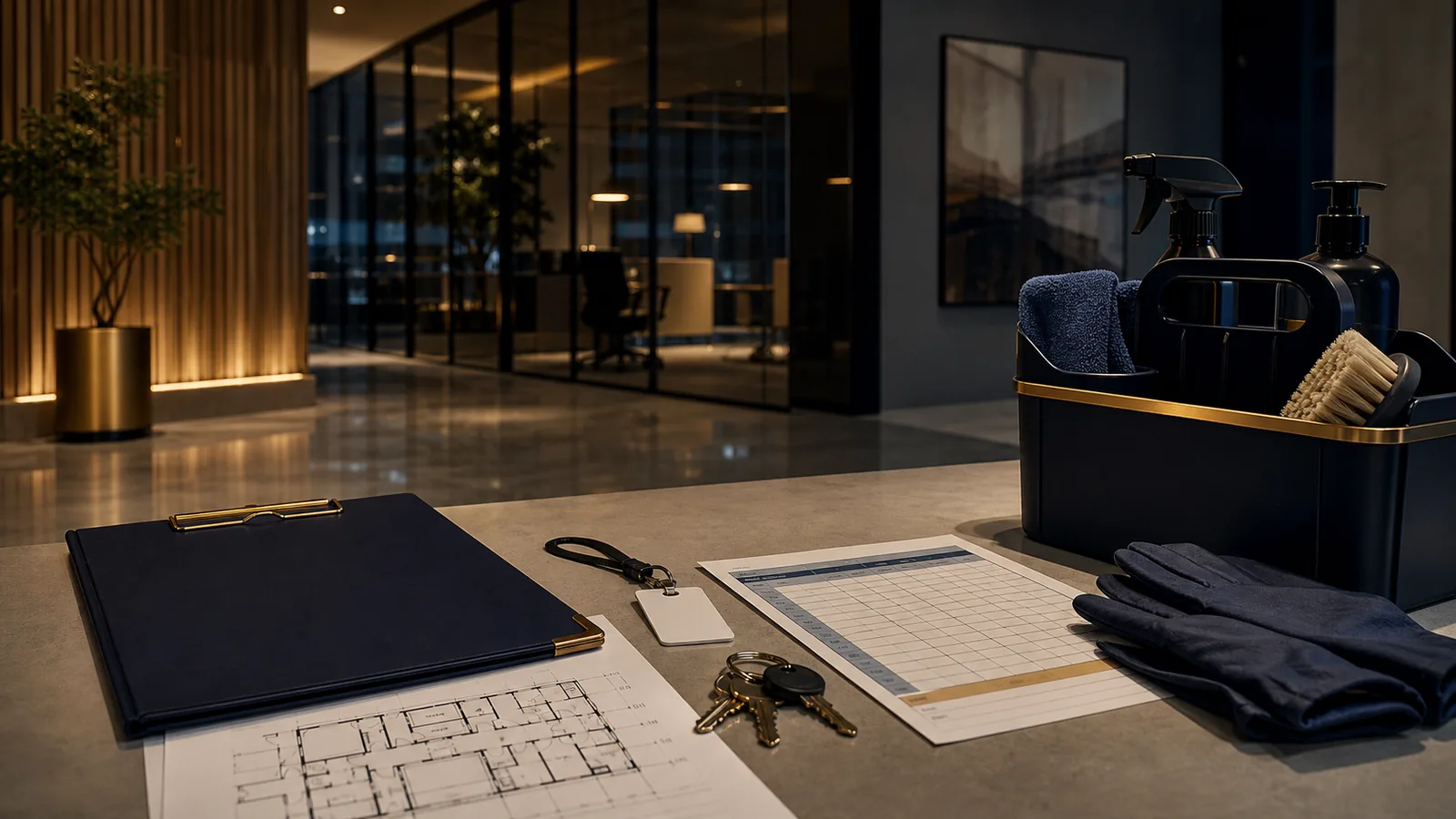
Before scope or price, confirm the basics that protect your site: current public liability insurance, workers' covered for the work, and a cleaner willing to complete your site induction and follow access and lock-up procedures. For sites like medical suites, childcare, or strata common areas, also confirm WWCC where relevant and that the cleaner understands the building's after-hours security and alarm process. A cheaper quote from an uninsured or un-inducted operator is a liability your facility carries.
Match the schedule to how the building is actually used
Good commercial cleaning is built around occupancy, not a generic template. An office may need after-hours daily or twice-weekly cleaning so workstations and amenities reset overnight; retail needs presentation cleaning before trade; medical needs higher-touch sanitising and clinical-waste awareness; strata common areas need entries, lifts, stairwells and bin areas kept presentable on a visible cycle. Ask how the cleaner will schedule around your peak hours and who covers absences so service does not lapse.
Understand per sqm versus per-hour pricing
Commercial cleaning is quoted two main ways. Per square metre suits predictable, repeatable scopes like open-plan offices and retail floors, where area drives the work. Per-hour suits variable or detail-heavy scopes — medical, deep periodic cleans, or sites with changing requirements — where time is the better measure. A site-specific quote weighs area, frequency, access, risk and scope rather than guessing an hourly figure, so the schedule matches the building instead of a generic rate.
Insist on accountability and a single point of contact
The difference between a cleaner that lasts and one you replace in three months is accountability. Look for a named point of contact, a clear scope document, and a way to flag and resolve issues quickly rather than a faceless roster. Owner-accountable operators tend to hold standards because their name is on the result. For multi-site or medical work, also ask about logs or sign-off sheets so cleaning is documented, not just assumed.
Run a documented mobilisation
Before recurring work starts, record zones, frequencies, exclusions, products, waste handling, keys, alarms, storage and issue escalation. A clear first-week review catches misunderstandings before they become a repeated quality problem.
Review the scope when the site changes
Headcount, trading hours, fit-outs and tenancy changes can make an old cleaning schedule unrealistic. Review the service after material site changes and at agreed intervals so the price and labour still match the building's use.
Where the factual detail comes from.
Details worth confirming.
Is commercial cleaning priced per hour or per square metre?
Both are used. Per square metre suits predictable scopes like offices and retail floors; per-hour suits variable or detail-heavy work like medical or periodic deep cleans. A site-specific quote weighs area, frequency, access, risk and scope so the schedule matches the building rather than a generic hourly guess.
Should a commercial cleaner be insured and inducted?
Yes. Confirm current public liability insurance and a cleaner willing to complete your site induction and follow access and lock-up procedures before signing. For medical, childcare or strata sites, also confirm WWCC where relevant and that after-hours security processes are understood.
Can commercial cleaning be done after hours?
Yes. After-hours cleaning is common for offices and retail so workstations and amenities reset without disrupting trade or staff. The cleaner should be comfortable with your building's after-hours access, alarm and lock-up process as part of the scope.
What types of sites count as commercial cleaning?
Offices, retail, medical suites, gyms, studios, real estate offices and strata common areas all fall under commercial cleaning. Each has a different scope and frequency, which is why commercial work is quoted by site rather than a single flat rate.